Pashupatinath sits on the banks of the holy Bagmati River in Kathmandu, Nepal, and is considered one of the sacred temples of Hindu faith, as well as the oldest Hindu temple in Kathmandu, and is on the UNESCO World Heritage Site’s list. Many, many moons ago, I saw a discovery channel special on this temple, and I decided that I would add it to the good ol’ bucket list.
I have been fascinated by the Hindu religion for over a decade, so naturally, this temple piqued my interest. Admittedly, I was most interested in meeting the Sadhus. Sadhu’s are holy men who renounce their worldly lives by cutting familial, societal, and earthly ties, to follow a path of spiritual discipline, and meditation in order to achieve mokṣa, or liberation, which is the fourth and final stage in a Hindu’s life. They have little to no possessions, and live off alms, and donations.

As we walked up to the entrance of the temple, we were surrounded by the remnants of the damage from the 2015 earthquake. As we got closer to the temple we were approached by a man sitting in a small room who charged us 1000 rupees to get in. I’m not really sure if they charge everyone to get in, or if they just saw a big sign that said TOURISTS on our foreheads. In any case, we paid, and went on our way. The man who charged us our entrance fee then began to walk with us, and tell us some of the history of the temple. We got a nice lesson in the Hindu religion throughout. Be aware, this man was expecting a (large) tip, and our tip was not to his satisfaction, as he stated “People pay me much more to do what I just did for you”. He didn’t harass us or anything, but just a head’s up.
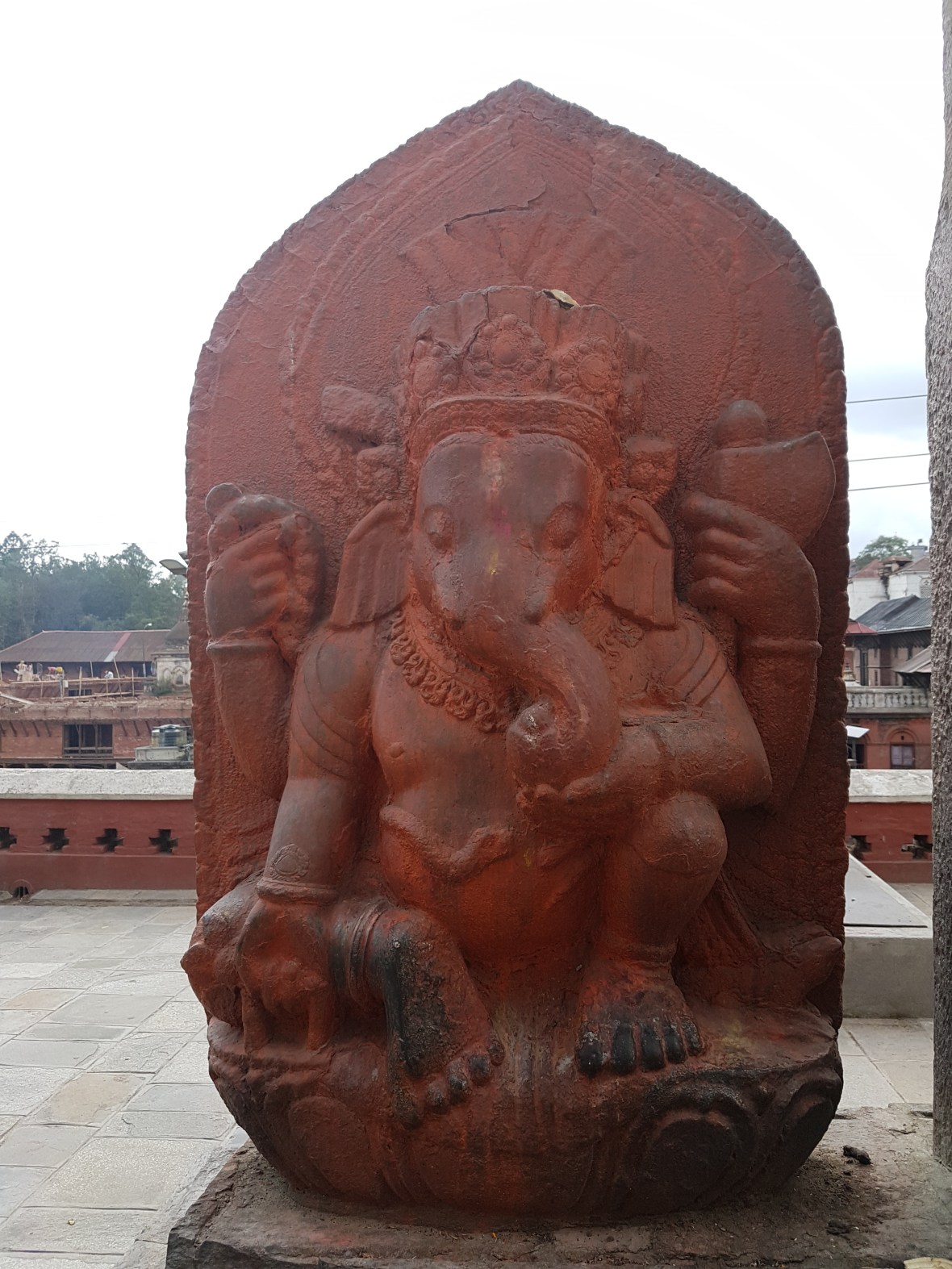
There is a bridge that crosses over the river where the cremations happen. One side is for the poor, and the other side is reserved for people who can pay. There are anywhere between 40-over 100 cremations per day held at this temple. You can watch the whole process, from them carrying the body through the temple down to the pyres, bathing the body in the river, and even watch the chief mourner (usually the eldest son) light the fire in the mouth of the person being cremated. A male body takes approximately 2 hours to be completely cremated, while females take up to 3 hours (we got all that extra juiciness). After the cremation is complete, the ashes are pushed into the river, and sometimes the family bathes in the river as well. You can witness all this at Pashupatinath, and it’s fascinating. While we were there, there were about 5 cremations happening. There’s so much going on around you, that it’s easy to get distracted, and forget that people are mourning here. There was one cremation where you could hear the sounds of a woman crying throughout the entire temple. It made me tear up, and realize how lucky I was to be experiencing something like this. In that moment, I looked up at the sky, and gave the big guy a shout out.


My favorite part, of course, was the area where the holy men hang out. As we approached the first group of them, they were eager to come over and interact with us. The head of the crew invited us over to where they were sitting, smeared some red paint on our foreheads, and put his hand on our heads. He began giving us blessings, “I wish you happy life, happy family, many blessings….” I was SOOO HAPPY. Then he leaned in closer and said, “two-thousand rupees.” SHEESH! That’s quite a bit of money for some blessings. I think the guide saw my face, and he called me over to explain that they live from donations, but that I should give them as much, or as little as I wanted.
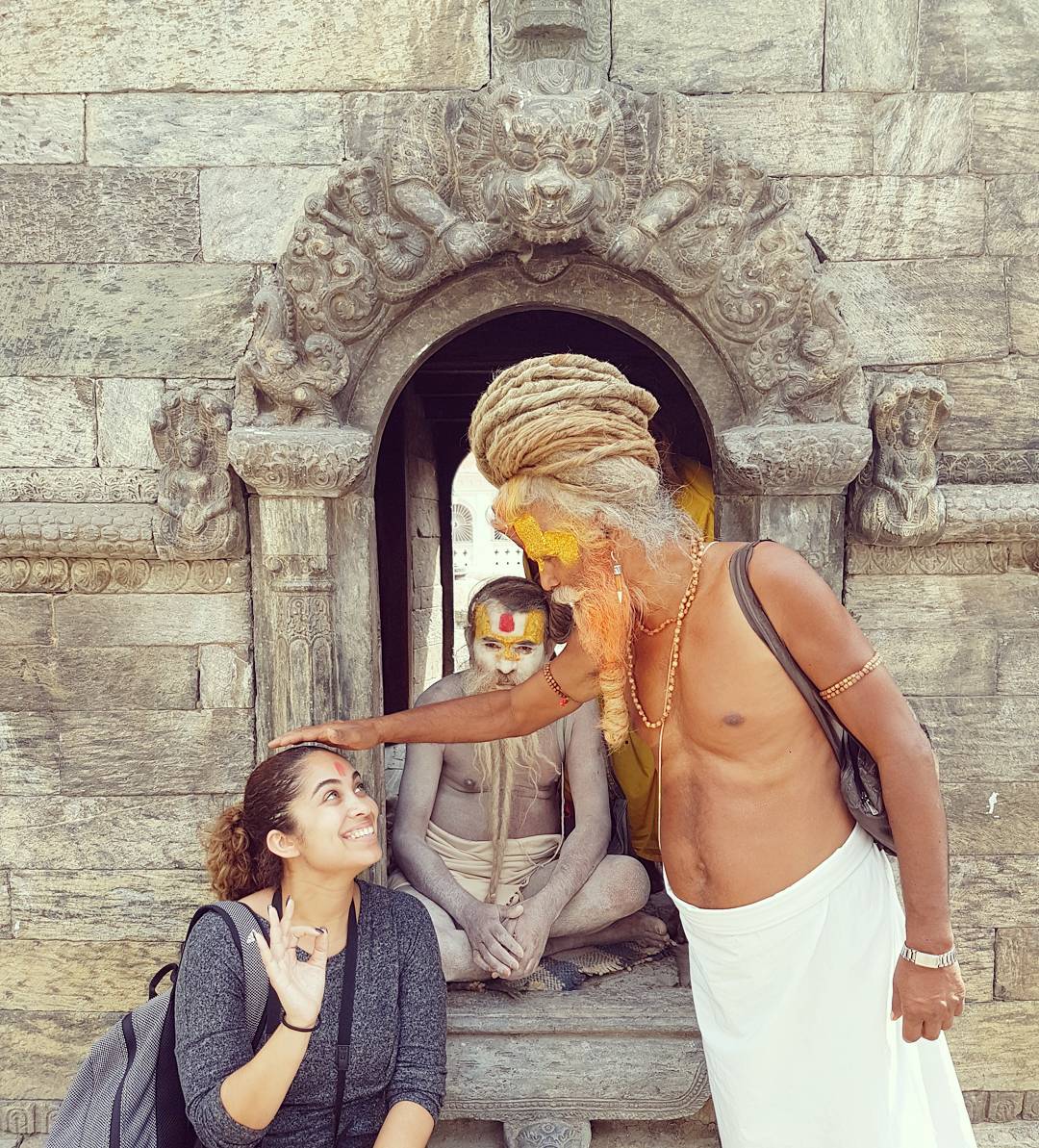
In any case, we sat there with them for a while taking photos, and laughing with them. Baba unwrapped his hair revealing 56 year old dreadlocks which reached down to the floor. In some sects of Sadhuism, a shaved head is an act of penance, so he must be living RIGHT!


We continued up some steps to another group of Sadhus. These were dressed differently, indicative of their respective sects, and these were a bit more playful. They sat me down right in the middle of them, and tied a silk bracelet around my wrist, posed for pictures, and once again asked for some rupees. This time, however, the youngest of the bunch took off his wristwatch (a bright blue g-shock, which I assume was given to him by a tourist), and asked me to adjust the time for him. When his other Sadhu friends saw that I was attempting to fix their friend’s watch, they handed us their watches to fix as well. If you know me, you know I can’t resist a little mischief, so I jokingly said “ok, but 2000 rupees.” They have a great sense of humor, so we shared a good laugh for a few minutes.


As you make your way through the temple, you’ll also see mischievous monkeys running around. They’re cute, but keep your distance, and hold on to your sunglasses, they can be aggressive, and they have sticky fingers lol.
There are several other smaller temples on the grounds. A Kama Sutra temple where a husband and his wives live (if you see it, notice the carvings on the door frames. Those are all the kama sutra positions a couple should be able to do), and the Mother Teresa house, which is now used to house, and care for sick elderly, and children.


Of all the temples we visited during our time in Kathmandu, this was certainly my favorite. I plan to visit again. I would suggest allowing the guide to come along with you, as it will inform you of all the history around you. Next time, however, I plan to stroll through on my own, and take my time.


#LauraTheeExplora over and out. Until next time!
 Adventures of Laura B